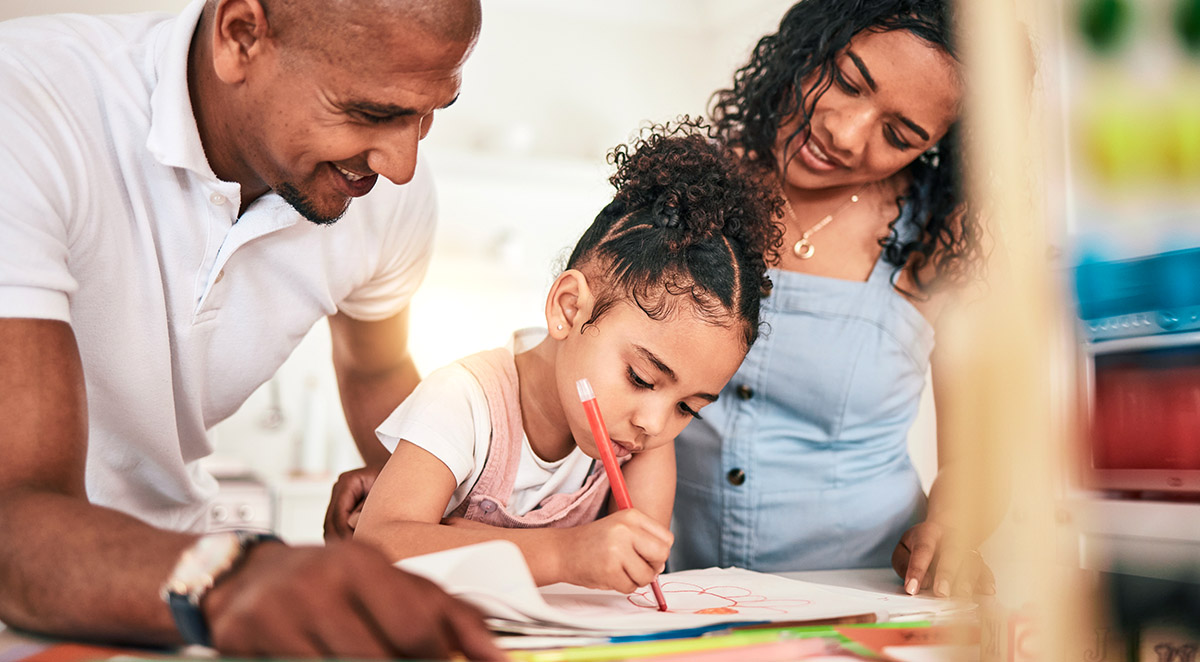
For thousands of Central Florida families, this school year will not look like the last one. For some families, homeschooling has served its purpose and it's time for something new. For others, it's been a wonderful fit, and they're simply looking for support to keep it going.
If you are weighing homeschool vs private school Florida options right now, timing matters. Enrollment decisions made in August shape the entire academic year, and Florida's scholarship programs carry deadlines of their own. This guide covers what current data shows, what state law requires, and how to evaluate a homeschool alternative Orlando families can actually use.
Quick Summary
- Florida reported 152,871 students in home education programs for 2024-25, a slight decline from the prior year and the first dip in nearly a decade.
- Orange County alone accounts for 9,280 home education students across 9,279 families.
- Section 1002.41, Florida Statutes, still governs home education: notice of intent, a portfolio kept for two years, and one of five annual evaluation options.
- Families moving from a Personalized Education Program (PEP) scholarship to a private school scholarship must meet specific assessment and switching requirements.
- The Crenshaw Academy offers small class sizes, accreditation, transcripts, and dual enrollment, which preserves personalization while adding structure and credentialing.
Where Florida Homeschooling Stands in 2026
Home education in Florida grew dramatically after 2020, then leveled off. State data shows 152,871 students and 114,370 families participating in home education programs during the 2024-25 school year, compared with 143,431 students in 2020-21 (Florida Department of Education, Home Education in Florida 2024-25 Annual Report). That same report shows a 1.7 percent decrease from 2023-24, the first year-over-year decline since 2015-16.
Locally, the numbers are substantial. Orange County reported 9,280 home education students from 9,279 families, placing it third statewide behind Hillsborough and Duval (Florida Department of Education, 2024-25). Neighboring Lake, Seminole, and Osceola counties add several thousand more.
Nationally, the picture is similar. Roughly 3.4 percent of K-12 students were homeschooled during 2022-23, up from 2.8 percent in 2018-19 (Pew Research Center analysis of NCES data, 2025). When parents were asked the single most important reason, concern about the environment at other schools led at 28 percent (National Center for Education Statistics, 2024).
That last finding is worth sitting with. Many families did not choose homeschooling because they wanted to teach. They chose it because the available alternative felt wrong.
Read our blog about addressing return-to-school anxiety after summer break.
What Florida Law Asks of Home Education Families
The regulatory framework has stayed remarkably stable. Under Section 1002.41, Florida Statutes, parents carry three ongoing obligations:
- File a notice of intent with the district school superintendent in the county of residence, including each student's name, address, and birth date.
- Maintain a portfolio of activities, records, and work samples, preserved for two years and made available to the district upon written request.
- Complete one of five annual evaluation options and submit the results to the district (Florida Department of Education).
No teaching certificate is required, and no particular curriculum is mandated. When a family ends a home education program, a written notice of termination and the most recent evaluation are due to the superintendent within 30 days. That last step matters more than parents expect, because an unclosed program can complicate records later.
The Burnout Conversation
Ask a room of veteran homeschool parents what the hardest part is, and the answer is rarely academics. It is the accumulation.
You are the teacher, the registrar, the guidance counselor, the transcript keeper, and the parent, often while holding a job. Year one felt like freedom. Year five feels like a second unpaid career. Families describe a recognizable pattern:
- Curriculum planning that consumes weekends and holidays
- Difficulty teaching upper-level math, lab sciences, or a second language
- Worry about whether a parent-issued transcript will hold up in admissions
- A teenager who wants a team, a lab partner, and a graduation stage
- Siblings at very different levels, all needing you at once
- A parent whose own career or health has quietly taken the loss
None of this means homeschooling failed. Choosing it was an act of advocacy, and a great deal of learning happened. Recognizing when a model has outgrown its usefulness is the same instinct that drove the original decision.
Scholarships and the Switch
Florida's school choice funding has expanded substantially, and the program you use depends on how your child learns.
- PEP (Personalized Education Program) supports parent-directed learning for students not enrolled full-time in a public or private school.
- FTC and FES-EO are the private school scholarships, used by families enrolling in an eligible private school.
A student may hold only one at a time, and a student cannot receive scholarship funding while enrolled full-time in a public school (Step Up For Students PEP Family Handbook). Families moving from PEP to a private school scholarship should note one requirement in particular: a student who completed the prior year on PEP must have norm-referenced end-of-year assessment results submitted in the EMA portal to be considered for funding (Step Up For Students, 2026-27 Scholarship Schedule).
Switching windows and program capacity change by year, so confirm current deadlines directly with Step Up For Students before you commit. The Crenshaw Academy accepts the Step Up For Students PEP Scholarship, and our scholarship resources page collects additional funding information for families.
Comparing Outcomes Honestly
What Homeschooling Does Well
Homeschooling delivers things institutions struggle to replicate: pacing tuned to one child, immediate correction of misunderstandings, freedom to follow a genuine interest for three weeks, and a schedule that bends around a family's real life. Parents also gain visibility into their child's thinking that no progress report provides.
What an Accredited Private School Adds
The gaps tend to be structural rather than academic. Accreditation, a registrar-issued transcript, and subject specialists are difficult to assemble at home. Credentialing carries practical weight: Bright Futures is open to graduates of public schools, private schools, and home education programs, but the documentation pathway differs, and private schools submit student coursework data to the state on the student's behalf (Florida Lottery, Bright Futures).
How The Crenshaw Academy Bridges the Two
Transitioning from homeschool to private school does not have to mean trading personalization for paperwork. The Crenshaw Academy has served Central Florida families since 1997 with a model that sits closer to homeschooling than most institutions:
- Class ratios of 12:1 in Lower School and 15:1 in Middle and High School. Teachers know students deeply, understand their learning styles, and adjust instruction accordingly.
- In-house tutoring and college counseling for organization, study skills, and content support.
- Accreditation by Cognia, the Association of Independent Schools of Florida, Middle States Association, Accreditation International, and NCPSA. Transcripts come from a registrar, not a parent.
- Dual enrollment at Valencia College or the University of Central Florida for 11th and 12th graders with a B average, and eligibility as early as 6th grade for students who meet qualifications.
- Independent Study options so a student can earn credit in an area outside the standard curriculum.
- A secular, non-religious environment with an Entrepreneurial Program for grades 9 through 12.
- A Professional Program offering schedule flexibility for enrolled students with demanding athletic or professional commitments.
Recent results reflect the approach. Our 2025 Kindergarten class scored in the 96th percentile in Sentence Reading on the SAT10, and Crenshaw students ranked above average globally in English on the PSAT/NMSQT and above average statewide in both English and Math on the PSAT 8/9.
Questions to Ask Before You Decide
- What specifically is not working now, and is it academic, social, logistical, or personal?
- What did homeschooling give your child that you refuse to lose?
- What credentials will your student need for the path they want after graduation?
- What class size would actually feel different from what you left in 2020?
- Which scholarship program fits, and what are its deadlines this year?
Frequently Asked Questions
Will my child fall behind academically after homeschooling?
Not typically. Small classes make it straightforward to identify where a student is strong and where a gap exists, then adjust. During a campus visit, ask how the school places incoming students and how it handles uneven skill levels across subjects.
Do you accept a parent-created transcript?
We review homeschool records as part of admissions, and enrollment includes a campus tour and a meeting between the applicant and administration. Once enrolled, your student earns credits on an accredited transcript issued by the school.
Can we start mid-year?
Yes. Families change circumstances mid-year, and admissions reviews applications on a rolling basis. Scholarship timing is the variable to check carefully.
Is homeschooling worse than private school?
No. They are different tools. Should I homeschool or private school is less a question of quality than of what your family can sustain and what your student needs next.
What grades does The Crenshaw Academy serve?
Kindergarten through grade 12 on our Gotha campus. You can review each division through our educational programs pages.
Your Next Step
Homeschooling was not a detour. It was years of individualized attention that most students never receive, and the right next school should build on it rather than erase it.
The most useful thing you can do is walk around campus, see a class of twelve in session, and ask hard questions about transcripts, placement, and pacing. Schedule a campus tour to see whether The Crenshaw Academy is the right fit for your family.