Every child learns differently. Some students thrive with discussion-based instruction. Others need more time with a concept before moving forward. Many excel when a teacher understands not just where they are academically, but who they are as a learner. The challenge is finding a school that is structured to actually deliver that level of attention rather than simply promising it.
For families in MetroWest searching for a genuine alternative to large, impersonal classroom environments, The Crenshaw Academy offers an approach to education built around the individual student from the very first day. With intentionally small class sizes, close teacher-student relationships, and a flexible curriculum designed to meet students where they are, the school has served Orlando-area families since 1997 with a model that prioritizes depth of learning over uniformity of instruction.
What Personalized Education Means
The phrase "personalized education" appears in a great deal of school marketing. But there is a meaningful difference between a school that offers individualized learning as a concept and one that is structurally designed to deliver it.
True personalization requires two things: small enough classes for teachers to know each student deeply, and a curriculum flexible enough to respond to what they find. At The Crenshaw Academy, our educational philosophy ensures that both conditions are present by design.
The Problem With Conventional Classroom Models
In a large classroom, a teacher may be responsible for 25 to 35 students at once. Under those conditions, instruction is necessarily aimed at the middle of the group. Students who need more time or a different approach may be left behind. Students who are ready to move faster may disengage. The pace is set by the logistics of the room, not by the needs of the child.
This is not a criticism of teachers in those environments. It is a structural problem. When one adult is responsible for three dozen students simultaneously, individualized attention is nearly impossible to sustain throughout a school day.
The Crenshaw Approach to Learning
The Crenshaw Academy resolves this problem at the structural level by keeping classes small. The school's philosophy holds that every child is different and learns by different means, and that a school should work with each child rather than forcing a child to fit into predetermined programs and standards.
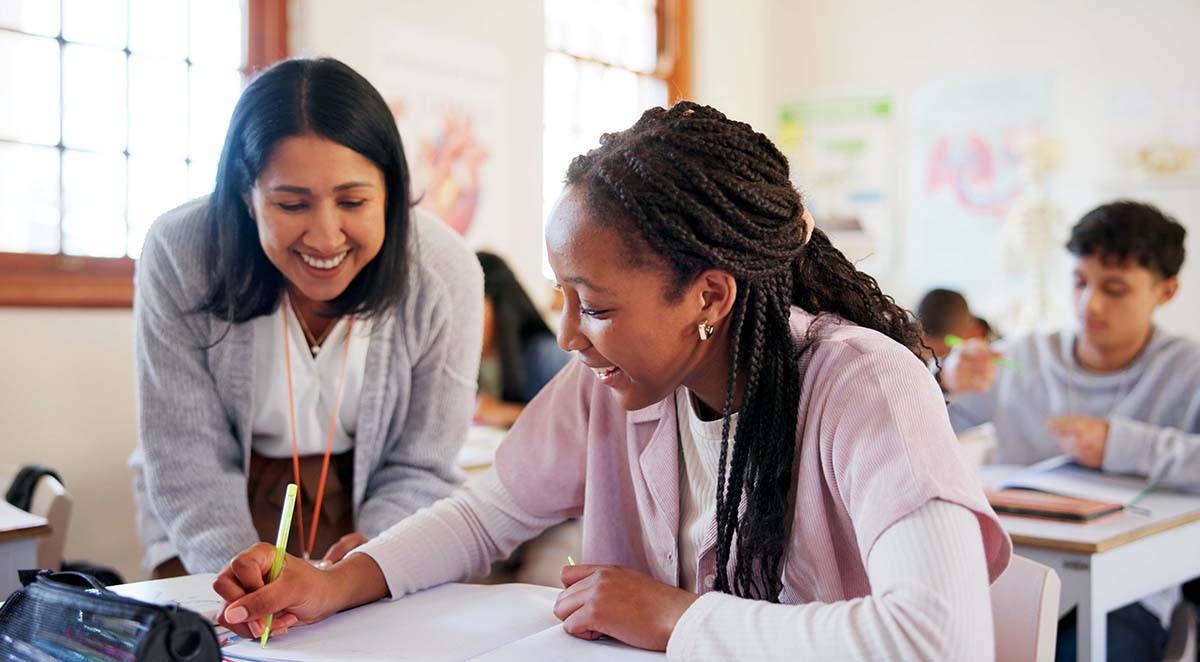
This means teachers are in a genuine position to observe how each student absorbs material, identify where additional support is needed, and adjust their instruction accordingly. Students are known by name, not by a seating chart. Their learning styles are understood, not assumed.
The modes of learning the school emphasizes reflect this philosophy:
- Debate and structured discussion
- Substantial writing and reading across disciplines
- Questioning and analytical thinking
- Hands-on experimentation
- Problem-solving applied to real intellectual challenges
These are not passive activities. They require a student to be present, engaged, and known by the person guiding them.
Small Class Sizes That Make Personalization Possible
The Crenshaw Academy's student-to-teacher ratios are not an afterthought. They are the structural foundation on which everything else rests. The school maintains the following ratios across all grade levels:
- Lower School (K-5): 12 students per teacher
- Middle School (6-8): 15 students per teacher
- Upper School (9-12): 15 students per teacher
In practical terms, this means a teacher at The Crenshaw Academy carries a fraction of the instructional load of a teacher in a conventional public or large private school setting. That difference in load translates directly into the quality and consistency of attention each student receives.
Classes at every level are seminar-style and discussion-based. Students are not passive recipients of lectures. They participate, contribute, and develop the habits of intellectual engagement that will serve them long after they leave the classroom. When a student is struggling, the teacher notices quickly. When a student is ready to go deeper, the curriculum can accommodate that too.
A Program That Adapts as Your Child Grows
Personalized education at The Crenshaw Academy is not a single approach applied uniformly across all grade levels. The school's program is calibrated to the specific developmental needs of students at each stage, from the earliest years of elementary school through the college preparatory demands of high school.
Lower School: Building the Foundation (Kindergarten through Grade 5)
Young students develop their relationship with learning during their earliest years of school. The lower school program at The Crenshaw Academy is designed with that responsibility in mind. The curriculum is developmentally appropriate, sequenced carefully, and built to inspire a genuine love of learning rather than a compliance with routine.
Instruction at this level places strong emphasis on foundational academic skills alongside early social development. Students are guided toward intellectual curiosity and self-confidence in an environment that is both nurturing and appropriately challenging. The program introduces a wide variety of disciplines to give each child early exposure to areas where their natural strengths and interests may emerge.
Explore the lower school experience further on The Crenshaw Academy's lower school page.
Middle School: Developing the Whole Student (Grades 6 through 8)
The middle school years require an educational approach that recognizes adolescent development while maintaining rigorous academic expectations. The Crenshaw Academy's middle school program integrates core academic subjects with study skills, community service, and personal growth activities in a way that addresses the whole student.
Core subjects at this level include math, English, science, social studies, and foreign language, alongside fine arts, technology, and physical education. All classes remain small and discussion-based. The curriculum is interdisciplinary and multicultural, designed to stretch students from concrete to abstract thinking and prepare them for the demands of upper school.
The middle school also attends deliberately to the organizational and behavioral skills students need at this stage: study habits, personal responsibility, and social maturity. These are not peripheral concerns. They are taught alongside content because students who have these habits in place are positioned to succeed in any academic environment.
Upper School: Preparing for College and Beyond (Grades 9 through 12)
The upper school is where The Crenshaw Academy's college preparatory mission operates at full intensity. The program provides a strong and varied set of courses that challenge students across disciplines while creating space for individual strengths and interests to develop.
The upper school curriculum includes:
- Honors courses in every discipline
- Electives that extend beyond the core program
- A computer science requirement
- Community service as part of the educational experience
- Modern languages built on the foundation established in the lower and middle school years
The curriculum is taught in small, seminar-style classes that emphasize methods of inquiry, written and oral expression, and the intellectual habits students will need in college and professional life. In an environment that promotes both independence and responsibility, students can also elect to take independent study courses for credit in areas outside the standard curriculum.
Discover the full scope of upper school offerings on The Crenshaw Academy's upper school page.
Additional Support When Students Need It
Personalized education extends beyond the regular classroom at The Crenshaw Academy. The school offers structured support systems designed to ensure that no student falls through the cracks.
In-House Tutoring
The Crenshaw Academy provides an in-house tutoring program to support students who need additional help with organization, study skills, or specific content areas. This supp[a]ort is available through the school itself, meaning families do not have to seek outside services to address learning gaps that may emerge during the school year.
Independent Study
For older students with specialized interests or areas of strength that extend beyond the standard curriculum, the school offers an independent study option. Students can earn academic credit for work in areas that may not be available through regular coursework, allowing their education to reflect their individual trajectory rather than a generic program.
Dual Enrollment
Eleventh and twelfth graders who maintain a B average or above are encouraged to enroll in one or two college courses per semester at Valencia Community College or the University of Central Florida. This dual enrollment program strengthens college applicati[b]ons, accelerates academic development, and gives students real-world experience managing college-level expectations before graduation.
Frequently Asked Questions
How does The Crenshaw Academy personalize instruction for different learning styles?
The school's small class sizes, with ratios of 12:1 in the lower school and 15:1 in the middle and upper schools, allow teachers to observe and respond to each student's individual learning style directly. The curriculum is also flexible by design, with options including honors courses, independent study, and in-house tutoring to address the range of student needs.
What grade levels does The Crenshaw Academy serve?
The school serves students from Kindergarten through 12th grade, with distinct programs tailored to the lower school (K-5), middle school (6-8), and upper school (9-12).
Is The Crenshaw Academy accredited?
Yes. The school holds accreditation from SACS/CASI/COGNIA, the Association of Independent Schools of Florida, the Middle States Association, Accreditation International, and the National Council for Private School Accreditation.
Does the school offer any support for students with particular academic strengths or interests?
Yes. For students who want to go deeper in a specific area, the school facilitates independent study for credit. Upper school students can also participate in dual enrollment at Valencia Community College or UCF. Faculty, parents, and students work toge[c]ther to identify resources that can enrich or extend the curriculum based on each student's individual profile.
Is The Crenshaw Academy a religious school?
No. The Crenshaw Academy is a secular, nonsectarian private school with no religious affiliation.
How do I take the next step for my family?
The admissions process begins with an appointment with an Admissions Advisor, conducted in person or virtually. From there, families complete a campus tour and meeting with administration, submit required documents, and confirm enrollment. Visit The Crenshaw Academy's contact page to get started.
The Right Fit for Families Who Want More
Families in MetroWest who are looking for individualized learning rather than a standardized experience deserve a school that is built to deliver it. The Crenshaw Academy's structure, from its small class sizes to its flexible curriculum to its layered support systems, reflects a consistent, school-wide commitment to the individual student.
If you are ready to explore whether The Crenshaw Academy is the right environment for your child, reach out today. An Admissions Advisor is available to answer your questions and walk you through what the program looks like in practice.